
How Black power bends and breaks the Blue party
When moderates go woke

Black Democrats are more moderate than white Democrats and identify as such, but they’re more left-wing than white voters overall. Due to the consistency by which black voters support Democrats, the vastness of that support in proportion of eligible black voters, and the fact that black Republicans are also more moderate than white Republicans, safe to say black voters overall are more moderate than white Democrats—particularly on issues such as immigration, energy, and climate change.
This trend in the black American zeitgeist has, I think, been a force in the push in making South Carolina—a state which Republicans have controlled since the turn of the century and only voted for a Democratic president (Jimmy Carter) once in the last 60 years—the first state in Democrats presidential primary.
South Carolina reps the 6th-highest proportion of black adults in the Union and yet had the lowest black turnout rate of any Southern state in 2024. Democrats hoping for a motivated-turnout from a more diverse set of voters will be sorely disappointed since South Carolina isn’t all-that diverse! Hispanic adults make up less than 8 percent of the population, much less than half of the national quantity; Asian-Americans makeup less than a fourth of their national proportion.
Democrats hoping for a motivated-turnout from a more moderate (rather than racially-diverse) set of voters will fair better but still left exposed to a potential second Reawokening.
So the theory goes: black voters help shift support to the moderate side of the coalition, improve the odds for the “centrist” candidate in the primary and put Democrats in an improved position to beat Republicans in the general—particularly if decided by a competitive bunch.
And that is what happened in 2020.
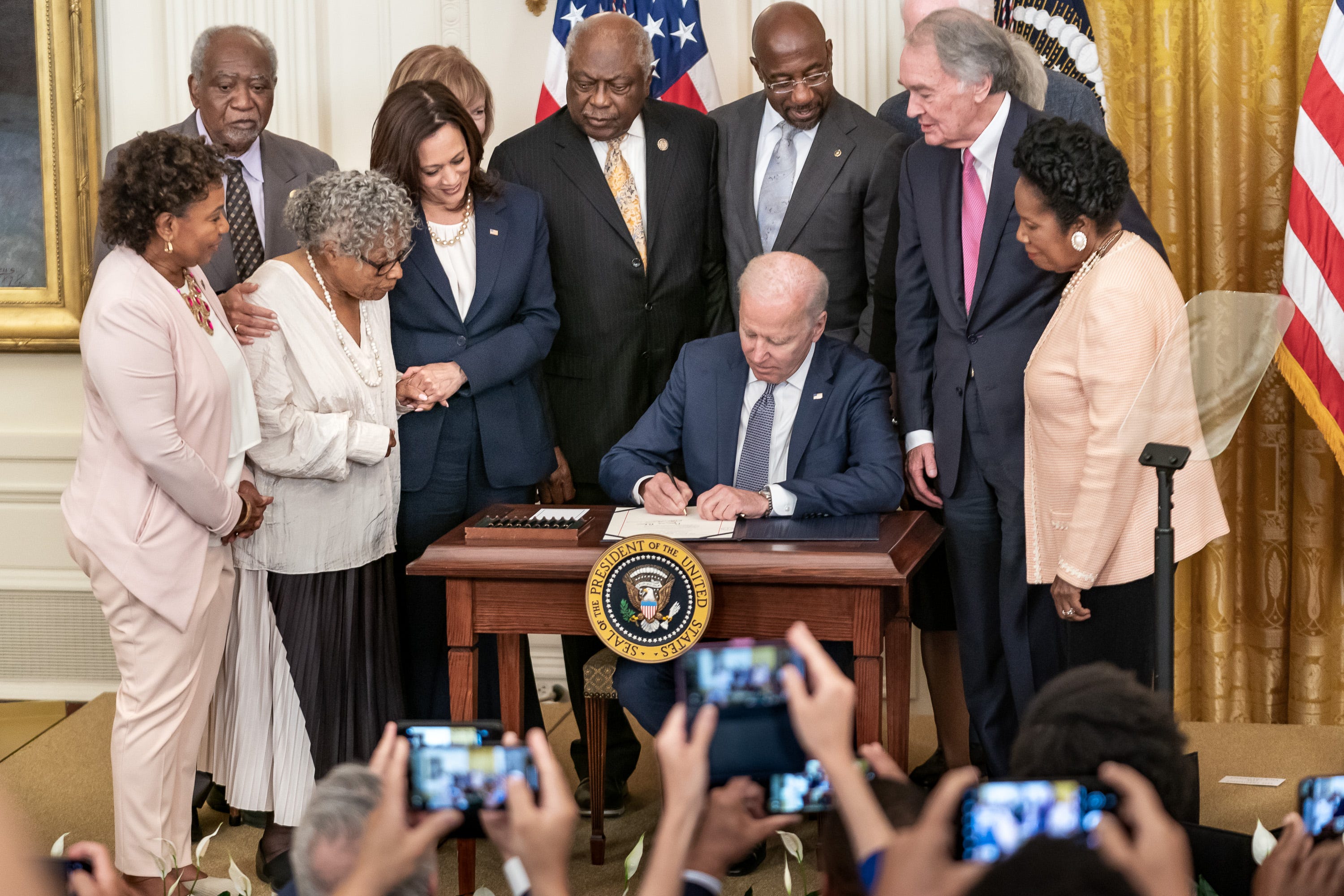
With help from unremarkable candidates dropping out and the platforms of the set of super-progressive New Englanders, it was black voters, lawmakers, and organizations that made a king out of the first black president’s right-hand-man. To pay that bill, Biden made the imprudent pledge to appoint a black woman to the Supreme Court (coincidentally taking place in South Carolina a few days before the primary took place).
South Carolina Rep. Jim Clyburn, whose endorsement pushed Biden’s support up past the post, reportedly confronted Biden backstage during the South Carolina debate and pressed him to make the pledge, while others like Biden’s campaign co-chair Cedric Richmond emphasized not checking “demographic boxes” for its own sake. Biden made the wrong choice.
The theory of black moderation stops being applicable when that support turns into demands for electoral reparations. Would it have been better for Biden to win South Carolina and then start taking black voter support for granted? Maybe. He'd already made one promise he was only lucky enough to keep because black voters in Georgia handed Democrats the Senate. How different—better?—things might have gone for Democrats had Biden not chosen Kamala Harris as his running mate.
Biden’s attempt to meet black voter demands and “win them over” was a gamble in the one area black voters consistently diverge from the nuances of their typical political thought, just to end up in a worse position politically. Juneteenth was made a holiday by near-unanimous support; Ketanji Brown Jackson fumbled when asked to define a woman; Kamala Harris lost the next election; black voters supported Republicans at levels not seen in decades.
If the exception to black voters’ moderation is identity-based, and more specifically, racially-based issues, it presents a clear problem for a party wholly dependent on black American support and desperately trying to find a way out of conservative-rule.
Do black voters take Democrats for granted?
People take it as a cold proposition that they are not owed a candidate built to their specifications; they want to be represented in ways that go beyond removing leaders they don’t like. For many black voters that necessitates either a particular color or white candidates willing to attend to groups of that same shade. The shared affection for forcing candidates to “win us over” requires candidates to make noticeable gestures to us in the form of assurances they cannot fully ensure nor insure.
Democrat Texas Senate candidate James Talarico found that out the hard way in his primary, where his opponent, Jasmine Crockett, diligently made the electoral race all about race.
Despite clearly possessing the attention of all races of Texans after securing the nomination and enjoying the best advantage Democrats have seen in decades, multiple black activists and lawmakers criticized Talarico for not doing enough to get their vote. Texas State Rep. Jolanda Jones, for her part, threatened to withhold black support, saying Talarico needs to “pay for us to get our voters out”—presumably believing she was speaking for all black people.
The qualitative distinction between these examples of Black America blackmailing Democratic candidates in the South and the white radical left’s woke identity-based babbling from a few years back is simply unrecognizable. Refusing to show up unless Democrats pay a further toll is black voters taking their opportunities for change and hope for granted. Democrats don’t owe black voters concessions on ideas they’d otherwise reject, and black voters aren’t owed anything from Democrats beyond being held accountable. Democrats are already at a disadvantage in the deep south—where most black people reside—and therefore must, as Biden said when addressing black graduates at Morehouse College, “be ten times better to get a fair shot.”
Abandoning the typical nuances of black political ideology also puts those black voters at a disadvantage because, as we’ve seen with Biden promising diversity appointments, trying to get too much out of your champion can backfire and leave them bruised and exhausted.
The woke-tendencies around identity issues is a fringe voice in black America, and broader society, but a larger force from a group one would expect and hope in a “moderate-wing”. The truth is: if black support comes inextricably bundled with demands to back reparations, keep affirmative action, criticize every police shooting, or implement DEI policies— Democratic candidates (white or not) shouldn’t be pressured into accepting them out of fear of losing that support.
The theory of black America as a moderating force in Democratic politics only works if Democratic candidates in competitive deep-south elections stand firm with black America during its occasional divergences into identity politics, without making identity-based commitments to placate them. Only then can we prevent those enforcing the bend of the moral universe from inadvertently breaking it.