
MAGA Exaggeration Syndrome and the death of nuance in American politics
The best article you'll read in your entire life

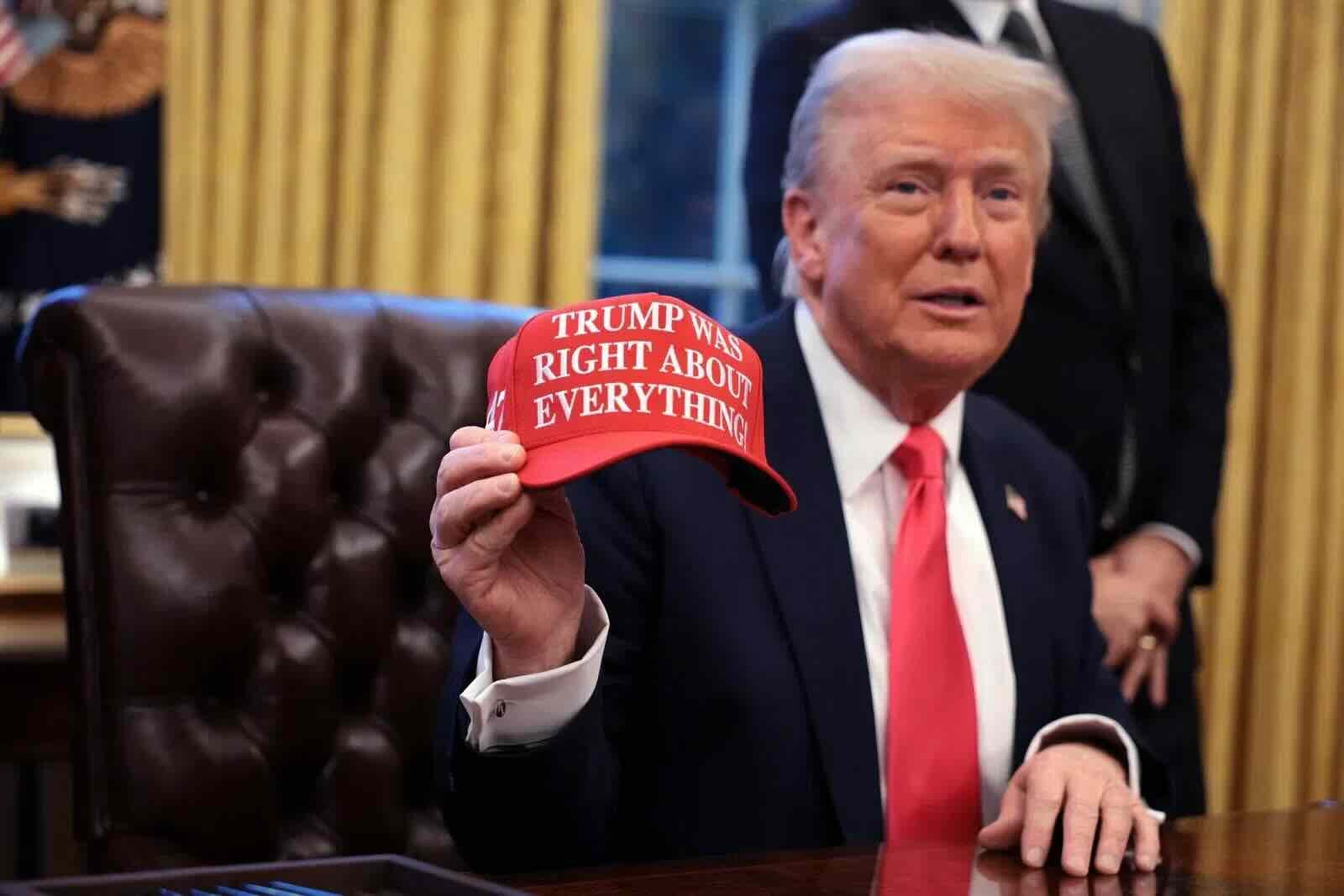
In just the last week:
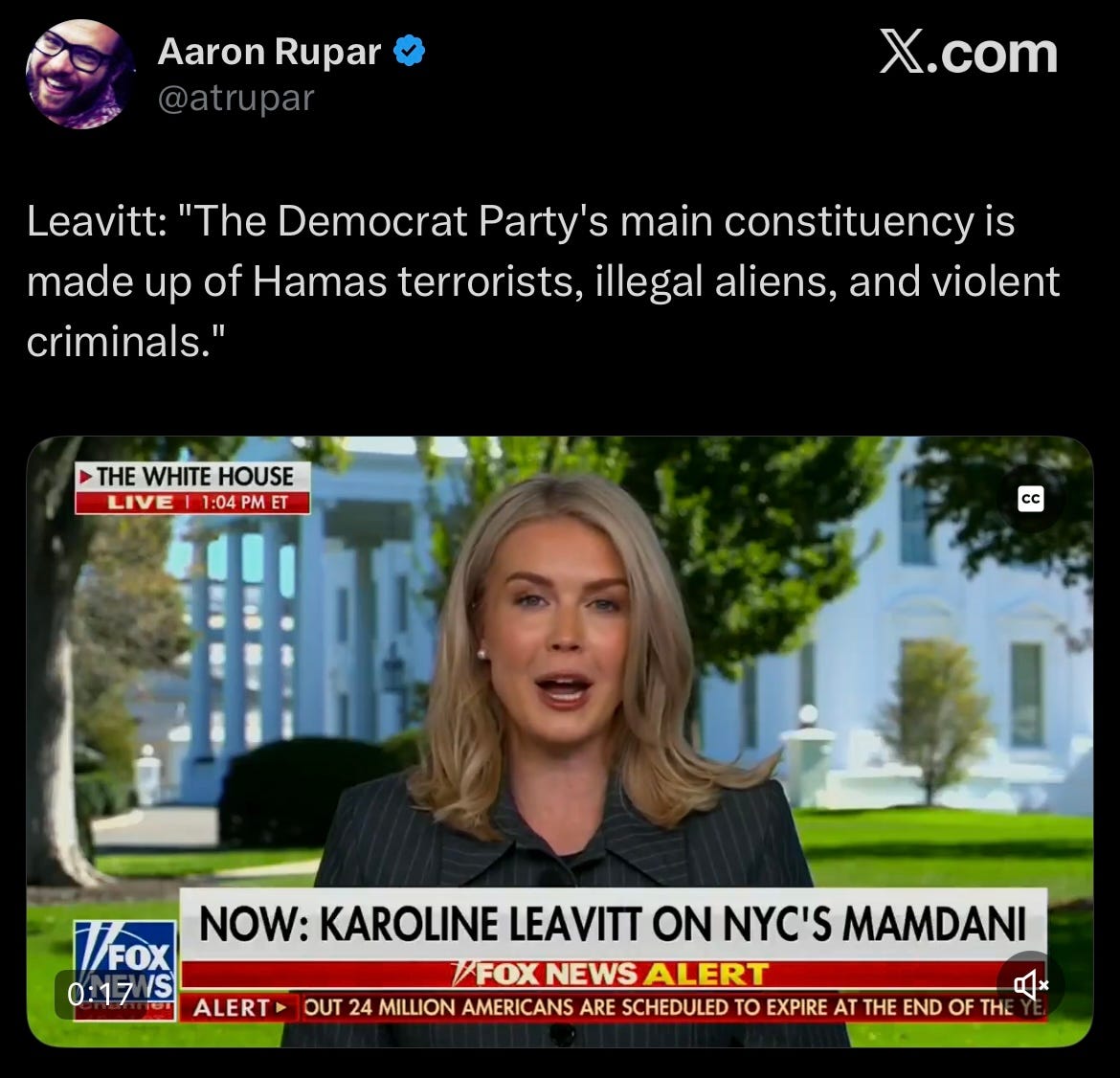
The White House Press Secretary said the Democratic Party was full of Hamas terrorists, illegal aliens, and violent criminals.
Senator JD Vance described the leak of a Republican staffer group chat — where Nazi content was shared — as nothing more than “stupid jokes made by kids.”
The State Department tweeted that Donald Trump is “the president of peace,” claiming he ended eight wars in eight months.
House Speaker Mike Johnson said the No Kings rally was full of socialists and communists who hate America.
Trump claimed that every boat he blows up in the Caribbean saves 25,000 American lives.
This is the kind of rhetoric members of our government use to tell the public about their actions, worldview, and that of their opponents. You’d think more people would be upset about this kind of language, especially when it’s so manipulative.
But that assumes people are aware of what’s wrong—and how to combat it.
I’ve been thinking a lot about how “normies” (people who aren’t deeply engaged in political news) respond to exaggerative statements like these. I live with one—my roommate—and talking with him helps keep me grounded. As someone who “compulsively consume news about politics”, I’m constantly processing the latest outrageous statement or development, and trying to convey the truth of the matter in creative and provocative ways.
He doesn’t. He scrolls past it or doesn’t see it at all. And if he does, he takes it at face value or sees it as just another political squabble—nothing more. Because of this, the exaggerative statements from MAGA are often the only inkling of purported political truth they ever receive. Discussions about the news starts with things like, “Did Trump really end eight wars?”, rather than “Did you see Trump say he ended eight wars? LOL”.
The difference is minor in appearance but major in implications: the former shows one’s lack of information and the latter shows some presupposed critique of the claim from information they know already know about—background knowledge of the contextual situation.
What we’re seeing from Trump, his Admin, and many MAGA-aligned figures is more than lying. It’s something more difficult to confront. I’ve started thinking of it conceptually as MAGA Exaggeration Syndrome. This is when a speaker takes a true fact and blows it up into a sweeping generalization, designed to distort more than deceive.
It’s worse than lies in some ways because it traps both the highly engaged and the disengaged—in different but interesting ways.
The Critical Response Dilemma
Take the first example—the White House Press Secretary’s claim that the Democratic Party is full of Hamas terrorists, illegal immigrants, and criminals.
Highly-engaged individuals, especially opponents of MAGA, might immediately reply with outrage:
“And your party is full of fascists!”
“So now everyone who supports Palestinians is a terrorist?”
“This from the employee of a convicted felon?”
These kinds of replies criticize the exaggeration but don’t really address the underlying implication. And all three presume some extra knowledge about the situation not mentioned in Leavitt’s original claims.
There’s a kernel of truth in what she said: some people who vote Democrat or align with the left have committed crimes. Some are undocumented. Some do support Hamas. That’s true of any large political coalition—including the Republican Party. But because her statement takes those exceptions and paints them as the rule, it creates a false image of the entire group. And critics are left with a dilemma:
If they acknowledge the partial truth, they risk validating the exaggeration.
If they ignore the truthfulness of the underlying claim, one may assume they’re dodging it and/or take the exaggeration more seriously because the opponents only address one aspect of it.
Either way, the exaggeration gets through. It lands. It sticks. It spreads.
This is why MAGA Exaggeration Syndrome is so effective: it’s not a blatant falsehood you can easily debunk, like a lie. It’s a distortion that hides behind selective truth.
When someone lies outright, it’s easier to challenge both the fact and the intention—or both. But when someone exaggerates a true sentiment, the intention is harder to pin down, and the audience is more likely to give the benefit of the doubt if they’re not paying close attention or readily aware of more contextual information.
Highly engaged people get stuck in the weeds, trying to explain why “technically true” doesn’t mean “generally accurate.” But by the time they’ve done that, the damage is already done. Much of the time, critics tend to repeat the exaggeration in order to make their criticism more applicable; giving normies more chances to hear the distortion as critics choose their poison.
Normies absorb it. They hear that Democrats are tied to terrorists and criminals and remember the images of Black Lives Matter protests, the anti-Israel college demonstrations—loosely validating some truth about the exaggeration. They recognize that the claim is based on something technically true, but they don’t have the background or context to see how wildly overstated or misleading it actually is.
The underlying truth in exaggeration
In the examples from the beginning, the underlying claims contain a sliver of truth, but that truth is stretched by sensationalism and the hyperbolic nature of MAGA rhetoric. It’s part of why the Republican Party can feel like a cult: not just because members refuse to criticize Trump, but because many of them consume, believe, and repeat these exaggerated claims without thinking too deeply about it—why would they?
Some of his supporters genuinely believe the exaggerations. Others know the claims are useful politically. And some simply don’t know enough to judge either way, but still repeat them because they sound familiar or affirm their worldview.
Even if they’re unsure of the facts, repeating the exaggeration still works to their advantage: it creates confusion, it forces others to respond, usually repeating the exaggeration, and for many normies, it becomes the only version of the story they hear.
And since there is some truth in these claims—like the fact that Trump was in office while certain conflicts eased—it’s easy for people to wrongly assume he caused it; that the best explanations for the easing must include Trump (the tendency to credit the president for anything that happens during their term, while assigning blame only along partisan lines, makes the distortion even more powerful.).
When the syndrome turns viral
Brian Beutler, who often unknowingly steals my ideas in a more elegant fashion, described what I’m talking about here in one of his latest posts: it’s a kind of rhetorical and psychological battle of the minds that Democrats have yet to figure out.
“What Republicans understand that Dems do not is that there’s value in hyperventilating about any story that makes the opposition look bad. If it doesn’t catch on, fine, move along to the next one…. The result will be to create an unpleasant miasma around them that is more powerful than any collection of lab-perfect lines of persuasion.”
The “hyperventilating” Beutler refers to is very similar to the Exaggeration Syndrome I’ve been describing.
I usually try to find some solution for the problems I discuss in my articles, but I’m truly at a loss for where to go from here. The dilemma both normies and the highly engaged face is real.
Normies can only push back against the Exaggeration Syndrome if they start paying more attention—which means becoming more politically engaged. But the engaged critics face their own problems: if they challenge exaggerations too technically, they risk sounding pedantic or out of touch to normies; if they ignore them, they leave the exaggerations to harden into “common sense.”
And once those exaggerations stick in people’s minds—among both normies and the engaged—they’re extremely difficult to dislodge. It’s normalized. And our critical faculties are utilized only to come up with the most outlandish claims imaginable rather than figuring out the truth of the matter.
Though I can’t find who said the exact quote I’m thinking of here, there’s a great saying, likely from someone in my “New Atheist” days, and it goes something like, “If the truth is good enough, why do you need to exaggerate it?”
As I searched for the quote, I found another by Josh Billings, a 19th-century American humorist, that was really good and sums up the fundamental points I’m making here. I’ll leave you with it:
There are some people so addicted to exaggeration that they can’t tell the truth without lying. Exaggeration erodes trust because it blurs intentions. Listeners cannot tell whether the story aims to inform or to impress. Accuracy becomes negotiable, and loyalty shifts from truth to effect. Ironically, the constant use of superlatives dulls their force; if everything is astonishing, nothing is. Reality, unadorned, starts to feel inadequate, and that breeds cynicism.
The only solution I can think of is to be really entertaining when speaking about politics. Like the way a great tour guide is fun and entertaining and leaves you with some new knowledge about a place.
True