
Why Republicans can't stop sounding racist
It's the culture, stupid!

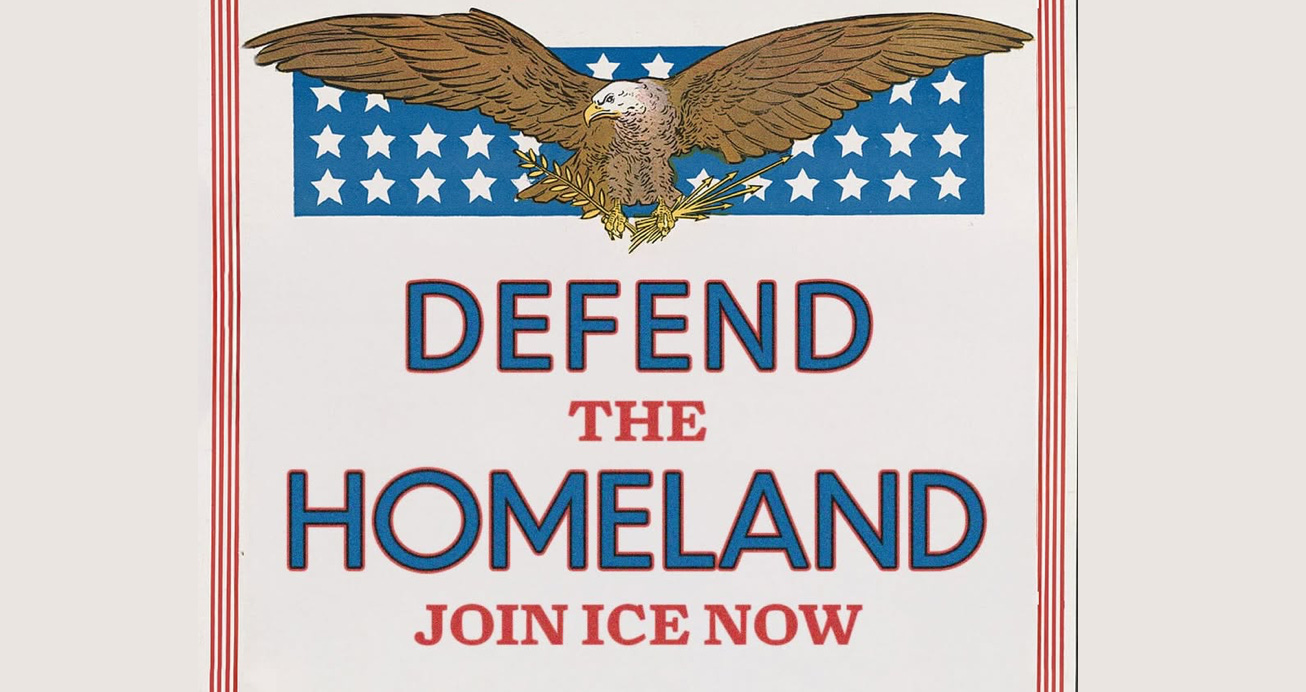
Right after his inauguration, Donald Trump told Sean Hannity that he could look at some immigrants and just tell they were trouble. It was just another Trump diatribe, but it revealed a darker sentiment bubbling in Republican politics.
Even if it wasn’t the harshest thing he’s said about immigrants, it made explicit an underlying assumption: that you can infer a person’s character from identity (skin color, language, so on) rather than their ideas and behavior.
For people in a country like the United States, where 1 in 5 are bilingual and 2 in 5 are non-white, this kind of speech should be concerning.
Large parts of the Republican Party have slowly aligned themselves with bigoted rhetoric and policies that target black and brown people at car washes, daycares, and factories. Masked military men with weapons stop cars on the highway to arrest entire families. Many American citizens and permanent residents now live in fear solely because of their race, accent, or attire—fear validated by the Supreme Court’s ruling allowing ICE to directly target individuals based on language and race.
What makes these policies even worse is how Republicans talk about immigration in light of the horrendous videos and reports. Their language is often unsympathetic yet vague enough to the point it’s hard not to hear white Christian-nationalist undertones.
If someone says:
“People who speak another language are irritating. I can usually look at them and tell their trouble. Too many people like that raise crime and housing costs, you know. It’s no reason their home countries are hellholes. We don’t want them tainting our society—deport them.”
Most readers immediately hear the bigotry. The stereotypes—and stigmas—all point to a particular image of who isn’t welcome: them.
No one assumes this tangent refers to Irish christians who commit tax fraud at a higher proportion than average Americans.
Many people hear what’s being implied. That plausible deniability is exactly how dog-whistling works. Yet, I don’t think that’s what’s occurring most of the time. To me, that vagueness is evidence of a deeper error: Republicans use identity markers like race, nationality, language, or religion because they don’t have a coherent, explicit idea of what culture actually is. When you don’t understand culture, you fall back on visible traits that feel substantive but tell you almost nothing about how a person thinks.
The result is rhetoric that sounds racist—attracting those who truly are.
The Nationalistic Dog-whistling’s of MAGA
Many Republicans insist they’re just defending “the culture”. But they never explain what that culture actually consists of. The identity-collectivist speech they utilize signals ideas associated with nativism and white nationalism, intentionally or not.
If Republicans could articulate a restrictionist immigration policy without sounding racist, I think they would. It would be more politically salient, substantively tolerable, and moral! They simply don’t know how.

Homeland Security Secretary Kristi Noem doesn’t cite specific data on violence or individual screening mechanisms for this recommendation: the justification is entirely rooted in a generalized stigma of certain kinds of people.
What kinds of people? Them.
But why those countries? Why not Russia, Israel, or Germany?
The Trump Admin’s lack of policy, exemplified by Noem’s arbitrary recommendation, is due to their reliance on proxies (majority-Muslim, majority black or brown, non-world-power) rather than any meaningful cultural criteria. And this is precisely where Republican conceptual understanding collapses: they refuse to explain their cultural expectations while demonizing entire citizenries based on their technological contributions as a whole throughout history.
The problem with basing immigration policy on nationally-ordained ideology is that we know individuals from backwards, authoritarian societies can and do become passionate defenders of open societies—and that some born in free societies reject those very values. Travel bans are erroneous not because we shouldn’t have immigration standards, but because banning citizens of entire nations denies the possibility of individuals of those nation’s choosing to fulfill those standards!
The identity-collectivism of Republicans
What kind of society are we trying to build? Presumably one that is open to criticism, embraces error correction, and strong enough to let diverse interests coexist without losing the shared traditions that make openness possible in the first place.
This is the part Republicans generally get right: we’re not just importing individuals, we’re importing ideas. I’m just not convinced Republicans know what actually separates those things. Too often, they make ideology sound inherent—essential—to one’s nationality, ethnicity, or environment. But identity tells us nothing about a person’s commitment to a particular set of ideas (you would think anti-woke folks would understand that).

Skin color and birth certificates cannot serve as meaningful criteria for deciding who belongs in a society that values individualism.
Do you understand the words coming out of my mouth?
The Vice President offers an example of why Republicans can’t help themselves but sound racist on almost a weekly basis.
We know when Vance complains about Spanish being spoken in his neighborhood, he’s not referring to a white Christian who happens to be bilingual.

Besides the Vice President arguing that the quasi-racist quote was made up and that he fully agrees with it, there’s a much deeper problem here.
Language is an important tool for communication and practical integration. But it isn’t an indicator of a person’s worldview or values. Boomers and Gen Alpha barely speak the same dialect. Los Angeles slang and New York slang may as well be different languages. Even English speakers across the world use different concepts and references within their shared terminology (remember what Brits call cigarettes?).
Language cannot serve as a measurement of someone’s cultural appropriation. Treating our mere utterances as essential to a person’s ideology collapses cultural analysis into bigoted identity politics.
Richard Hanania makes a useful observation about Vance’s fixation on the languages spoken by neighbors. Consider Switzerland: a predominantly white, Christian country where barely half the population shares the same language. Yet most Republicans would have no objection to Swiss immigrants moving into their communities.
Why? Is it because the Swiss are white? Because the country has few Muslims or racial minorities? Given the rhetoric of the Trump Admin, and in some cases its policy choices, many readers rationally interpret it that way.
To trouble or not to trouble?
We can’t talk about which cultures to permit unless we understand the culture we want to build.
It’s true: we should be able to have policy conversations about culture without being accused of racism or xenophobia. And it should be okay to base immigration policy on that.

Open societies that value diversity and dissent cannot function if they admit large numbers of people who are dogmatic and exclusionary. What Republicans have yet to grasp: it is the dynamic institutions of individual minds that determines whether someone can embrace and sustain an open societies’ cultural traditions.
If what we are seeking is a shared culture, not particular ethnic customs or origins of birth, then it would be wrong to ignore the pleas of Hong Kong independence-seekers or to deny Afghan allies who risked their lives assisting U.S. military operations and clung to US planes during the evacuation. This is not a call to abolish law enforcement or ignore criminal behavior. Nor does it mean granting citizenship automatically.
What we want is for Republicans to narrow their grievance to illegal criminals and degenerates—not anyone who doesn’t look like them.

Removing and denying individuals from certain countries who have undergone the rigorous process of becoming U.S. citizens (which includes learning English, understanding American history, and navigating numerous interviews and forms) from their naturalization ceremonies should itself be a criminal offense. But almost everyone notices the tinge of racism undergirding the entire operation.
A society that values individualism must evaluate individuals.
Culture is a set of ideas, not a phenotype or geography. So when immigration policy is guided by identity, racism fills the explanatory void.
