
Why I changed my mind on voter ID. And why Democrats should too.
Even principles need updating

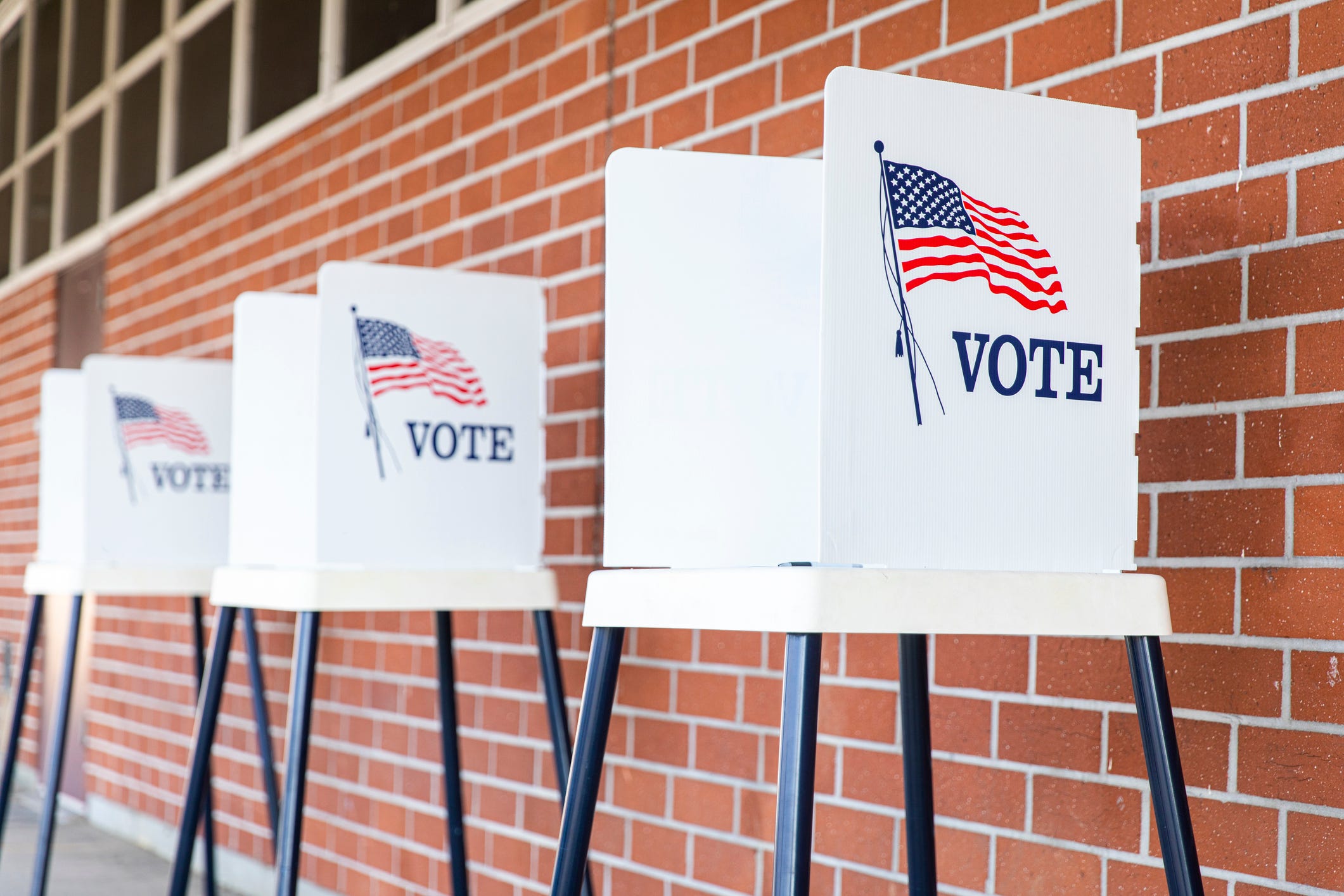
I’ve long opposed mandatory voter ID. Not because of claims of “racism” or “classism,” but because the spirit of the Constitution (especially in the post–civil rights era) is to avoid placing unnecessary barriers on voting. What makes certain barriers necessary is whether the problem is serious enough to undermine the credibility and/or actual fulfillment of free and fair elections.
Things that can undermine election credibility, such as fraudulent ballots or manipulation in counting, are technically real. But I’m not convinced they rise to a level that meaningfully threatens election integrity here in the United States—though we should still work to fix the bugs that exist.
One current bug is the growing distrust in elections among voters. I entirely blame Donald Trump and the MAGA movement for this erosion of trust. However, assigning blame doesn’t change the reality: confidence in elections is declining, and that decline itself is a serious democratic problem.
If Democrats want to restore the public’s confidence, they must start to prioritize restoring trust in elections over the principle of eliminating every procedural burden.
Why fight to the death on this?
I think many Americans misunderstand how elections function at a basic level.
We vote to remove or retain those in power; we don’t vote to directly implement specific ideas. Once in office, politicians are free to act in unpredictable ways. They can shift left or right, or even switch parties altogether. The only real political constraint on their behavior is their desire to win the next election. Therefore, the implications of any election outcome—what Trump or Harris would actually do once in office—are inherently uncertain.
All of this is to say that election reform is uniquely fraught. Changing the rules of elections is risky precisely because we don’t know how those changes will affect outcomes in the short, middle, or long run. Republican gerrymandering efforts from less than a year ago, for example, now appear to be approaching a point of backfire. That uncertainty makes reform complicated and demands a periodic reassessment of positions.
Voter ID is one such case. What was once widely understood as a policy that benefited Republicans has, within the span of a decade, shifted in ways that may now advantage Democrats.
Matthew Yglesias wrote a piece last year titled “When People Don’t Vote, Democrats Win,” arguing that Democrats’ opposition to things like voter ID requirements isn’t worth placing themselves on the unpopular side of a policy that may be, on balance, beneficial. As he puts it: “Why fight to the death on this?”
Democratic over-performance in recent special elections has given corroboration to this theory. There is, of course, some degree of backlash to any party in power—but that dynamic should compound the pattern, not disprove it.
Mandatory voter ID appears unlikely to harm Democrats electorally, and it is broadly popular with voters.

As I’ve been stressing for the past year, Democrats need to do everything they can to win the Senate in November. Coming out in support of a policy with such widespread approval would likely improve Democrats’ standing with the electorate, particularly given that younger, conservative-leaning voters are among the most suspicious of the election process. Supporting voter ID would also take out some steam in conspiracies and musings about Democrats wanting less election security.
A symbol of political miscalculation
Unfortunately, Democratic leader Chuck Schumer has become a symbol of Democratic miscalculation by reacting to bad optics instead of taking advantage of good political opportunities.
Just a couple of weeks ago, a video circulated of Schumer touting his record on funding Israel and the relationship he helped foster between the two allied nations. I like to think I take a more nuanced view of the conflict than many of my left-leaning counterparts, and even I immediately recognized how bad of a look this was. Then, whether in response to the backlash from that video or for his own reasons, Schumer decided last week that coming out against Republicans’ SAVE Act would be the smart move.
I have my own issues with the latest Republican election legislation, particularly with the limits on the allowed documents required to vote. But I couldn’t help but notice that Schumer likened the bill to “Jim Crow 2.0.”

Democrats should avoid doing this, even if they are against voter ID. Not only does it underrate the oppression imposed by actual Jim Crow laws, they also ignore the real improvements in our laws and broader society when it comes to voting equality. Discarding that history for a talking point about providing birth certificates or passports is disingenuous and only adds credibility to Republican attacks on Democrats reluctance when it comes to tightening election laws.
The SAVE Act is not the new Jim Crow. Race is not even the most important implication of the bill—it’s married women who changed their names. These women are more likely to be white and right-leaning. The only counterargument I can see for Democrats, in terms of electoral risks, is the growing narrative that women have been moving left over the past decade—the so-called gender voting gap. But this is often overstated. PEW data shows that Trump received a higher share of support from white women in 2024 than he did in 2016, and only two points fewer than in 2020. He also gained five points among Black women from 2020 to 2024.
Again, election reforms are difficult to assess given an ever-shifting electorate. But on its face, it appears Democrats would not be losing nearly as much as they think they would by supporting voter ID laws—or even the SAVE Act more broadly. Even if they can’t get themselves to support new election laws, they shouldn’t be comparing modern election legislation to historical apartheid.
Democrats should try to win elections
Adam Schiff recently made a fair point in response to an irrelevant ABC News question about the SAVE Act, when he was asked whether Democrats should support basic photo ID requirements. Schiff argued that Republicans have spent years sowing distrust in elections through baseless fraud conspiracies, and that asking Democrats to now support “voter suppression” would reward that behavior.
His sentiment is valid, but it misidentifies the central problem Democrats now face.
As I’ve argued, election reform is not an area where parties can reliably outmaneuver hypothetical future tactics by the opposition. What is certain is that public confidence in democratic institutions is essential to democracy. Supporting basic ID requirements does not commit Democrats to endorsing every future restriction Republicans might propose. If Republicans later push more exclusionary measures, Democrats can and should draw a clear line and persuade voters that those policies—not showing a driver’s license—are the real sources of democratic harm. If they lose that argument, like they have with voter ID, then they’ll have to make further concessions. That’s politics.
I found a study from last year that argues states with strict voter ID laws experienced a nearly 3% decrease in turnout in presidential elections—but little to no effect in states that had adopted those laws earlier. Alternatively, midterm election turnout in those same states actually increased by a similar amount, particularly among early adopters. There seems to be a modest effect that varies by election type and adoption timing, but overall the impacts range from generally beneficial for Democrats to no impact at all.
This brings us back to the key question Democrats should be asking themselves: “Why fight to the death on this?”
Voter ID is not needed to stop fraud. But it may be necessary to restore trust in the system and could even work against Republicans. We can’t know the full impact in advance, but what we do know is that elections are one of the most important mechanisms of our society, Americans have grown distrustful of both the procedures and the results, and Democrats need to do everything they can to win public support.
Another thing we should acknowledge is that actual implementation of requiring voter ID can be easily corrected later if it fails as a solution. Take all this together and it looks like a good argument for Democrats championing stronger identification requirements in elections.
FYI This bill is intended to suppress the votes of millions of married women who changed their names.
IDs should be free to acquire if they are required for voting.
That’s my only issue with voter ID. I don’t like the idea of charging someone to vote.