
Trump’s self-interest is complicating Vance’s 2028 ambitions
Vance is caught between Trump and 2028 voters

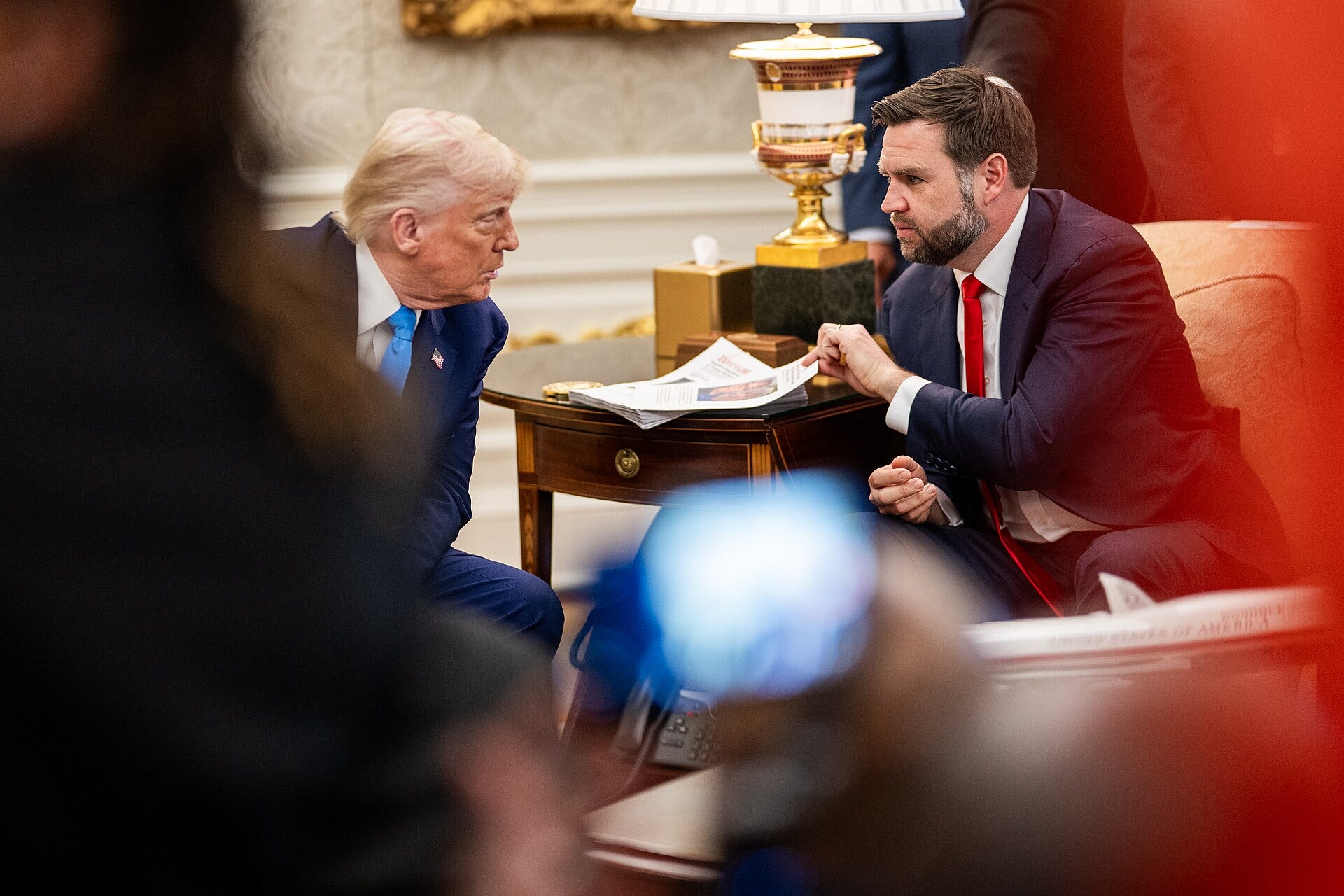
Vice President JD Vance returned from his diplomatic mission in Pakistan having accomplished nothing.
But maybe that was the whole point.
If we’re being honest, the ceasefire framework Vance was sent to negotiate was futile. The original ten-point proposal included a full removal of sanctions on Iran, Iranian control over the Strait of Hormuz, and a complete U.S. military withdrawal from the region. Neither Washington nor Tel Aviv could accept those terms.
And since both sides think they hold enough leverage to demand their preferred outcomes, the mission was likely doomed from the start.
I try to make it a point to take Trump seriously and literally. So, when he said he would take the credit for any success springing from negotiations, and leave Vance out in the cold if it failed, I think Trump knew the outcome he wanted was improbable at best.
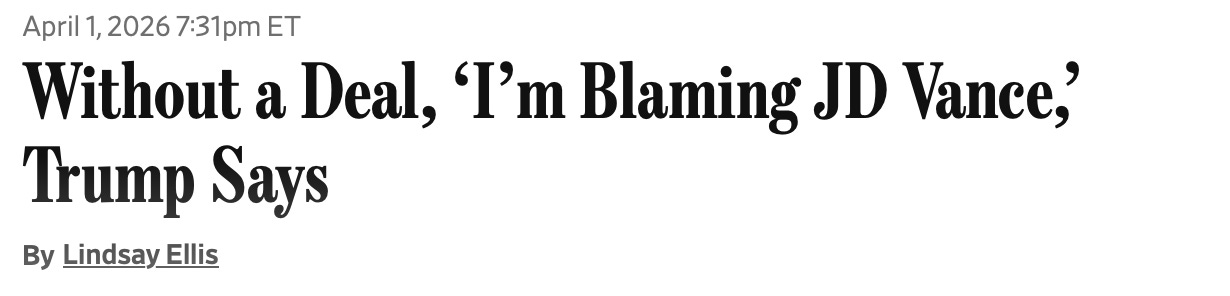
That makes his sending of Vance particularly interesting.
Vance is not just the sitting vice president; he is also the current frontrunner for the 2028 Republican presidential nomination. That duality shapes everything about how he operates. Vance has carefully managed his proximity to foreign policy decisions, deliberately distancing from the Trump-Rubio-Hegseth faction driving the Admin’s more aggressive posture.
That divergence first became noticeable to me during the Signalgate scandal, where Vance argued against “bailing out Europe” and maintained that any military action against the Houthis should be limited to “sending a message”—even framing an ostensible military win in Venezuela through the lens of the fentanyl crisis, rather than through oil interests or regime change.
That distance appeared again in New York Times reporting surrounding Trump’s decision to enter the conflict with Iran.
By its account, Vance was the sole voice in the room to raise any direct (if passive) objection. Given how well rewarded those who opposed the Iraq War were—from Barack Obama to Trump’s own early break from Bush-era idealism—someone in Vance’s orbit clearly wanted his dissent on the record.
But Trump does not reward dissent.
As the lone skeptic, Vance was placed on a diplomatic team that Hillary Clinton described as a joke. And she’s right. Usually, we would expect a president to send a team of experts in nuclear energy, physics, Iranian civics and culture, along with foreign policy leaders and possibly even oil executives.

That’s simply not how the Trump Admin operates.
Vance, Steve Witkoff, and Jared Kushner are, whatever their other qualities, men who built their fortunes in real estate who now function as designated fixers for the world’s chaos.
Alex Shepard, writing in The New Republic, adds context to Vance’s humiliation by showing how the week itself told a story of undermining and political immolation. Vance began in Hungary, campaigning alongside the unpopular Viktor Orbán (who lost), before arriving in Pakistan. Meanwhile, Secretary of State Marco Rubio, a more enthusiastic supporter of intervention in Iran, was photographed alongside Trump at a UFC event, completely unburdened. The man whose counsel contributed directly to the situation now facing the American public—and Trump itself—was rewarded. The man who expressed doubt was handed a poisoned assignment.
Whatever quiet dissent Vance hoped to register before the war began is now buried beneath the louder image of a vice president walking away empty-handed. Plausible deniability, while being a carefully cultivated asset, is difficult to claim when your face is on the front pages under the words “fail” and “war”.
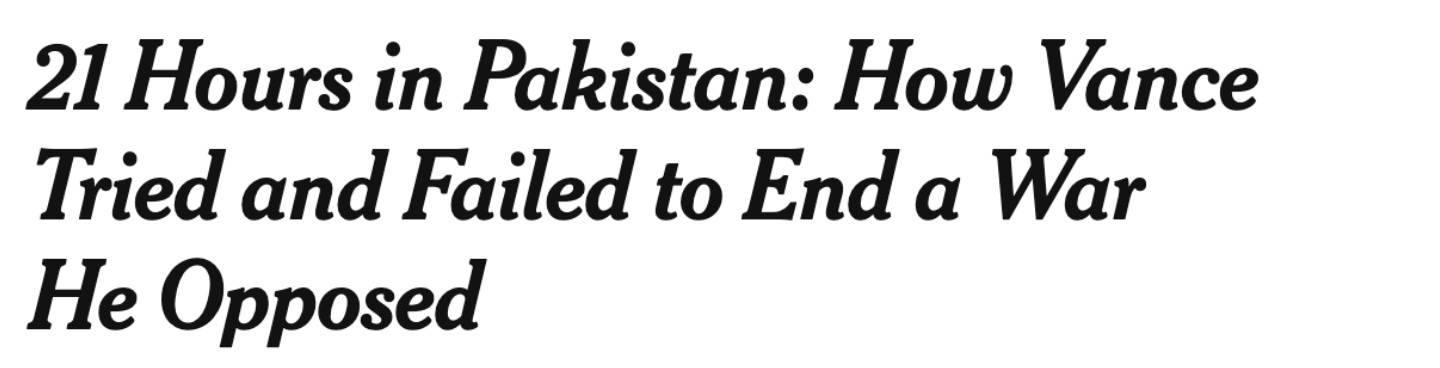
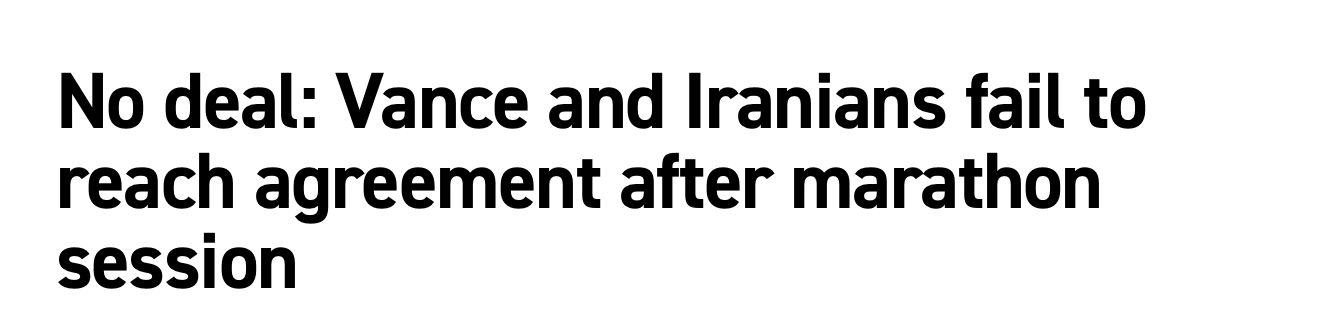
I try to avoid cynical theories and conspiracies, but this theory doesn’t require assuming bad faith. If there’s one thing Trump is an expert on it may just be publicity—how to foster it, control it, spin it, and so on. It’s possible the decision to send Vance was simply tactical: if Trump was going to be with Joe Rogan at a UFC event, he might as well send the second-highest-profile envoy to handle the moment. A more nuanced reading is that Trump deliberately placed Vance on the mission to neutralize any future criticism from him regarding Iran (not that he would do so publicly anyway). And that would’ve been a smart play: it’s hard to credibly distance yourself from a war you were publicly sent to help end.
Just as much as Vance wants to be the next nominee, Trump wants to keep attention on himself. This intra-ticket battle has been waged for decades, most notably in the “President Cheney” days.
But the pattern of Trump humiliating and targeting dissenters predates this single mission. It’s even possible the negotiations were another farcical performance as the Admin conjures up their real intentions in the Situation Room. Clinton herself noted that the original negotiations in February were unrealistic, and expressed shock that Trump claimed no one told him Iran might close the Strait of Hormuz.
“Every war plan I was ever involved with, that was the first thing we assumed Iran would do,” she said, laughing in disbelief.
The one dissenter received the most visible and least winnable assignment. I don’t think that’s by coincidence. But it’s also possible it wasn’t entirely nefarious either. Those most aligned with the original decision to war with Iran were given room to shine, including Hegseth’s rambling press conference a few days before the current ceasefire, in which he tried to explain how lethal and sophisticated the U.S. military is compared to the Iranian regime.
Whether by design or by instinct, the outcome is the same. Vance went to the front lines. He returned with his tail between his legs, forced to advocate for a position closer to Trump’s vision of maximum pressure.
We’ll have to see how much this comes back to bite; my guess is quite a lot.
Vance is releasing a book on Catholicism and Trump is bashing the Pope. How is this all going to work out!?
Oddly Vance is the one cabinet official who has some independence from Trump, because as an elected member of the presidential ticket he cannot be removed other than through the impeachment process. of course, that is cold comfort when you work for a sociopath who wouldn't hesitate to remove your Secret Service detail (https://www.bbc.com/news/articles/cvg49jz7v8no) and release thugs on you (https://en.wikipedia.org/wiki/January_6_United_States_Capitol_attack).