
Trump holds all the cards when it comes to tariffs
SCOTUS' upcoming ruling on Executive tariff authority

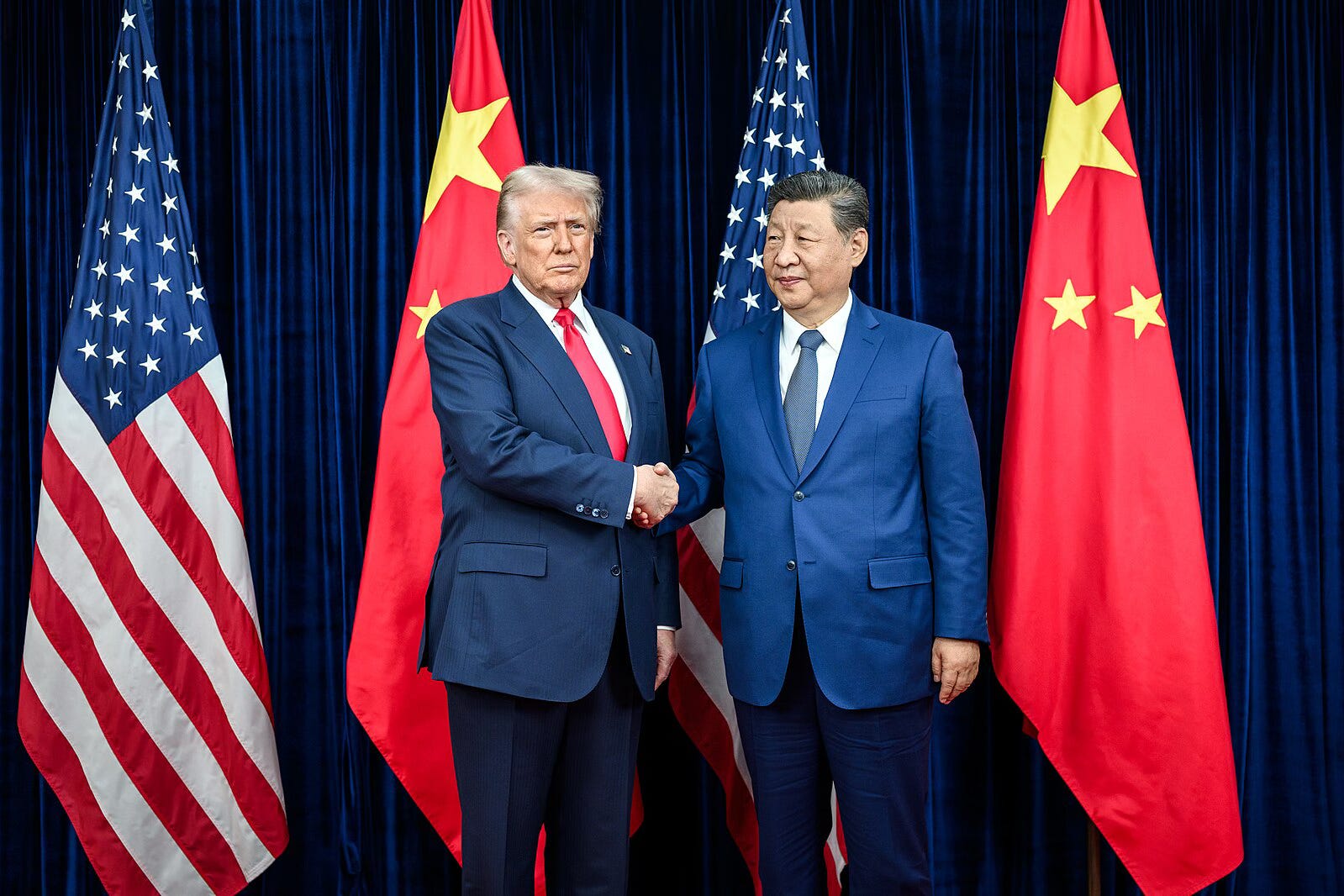
It is currently being argued in the Supreme Court on whether the president, drawn from the 1977 International Emergency Economic Powers Act, has unfettered ability to unilaterally set tariffs whenever an emergency is declared at the president’s sole discretion. The conservative Justices seem skeptical, to say the least.
I wrote a note a few weeks ago arguing why Trump should be optimistic about this pending ruling on tariffs. What I failed to consider was how great a decision it was to appeal the case to the Supreme Court.
It’s no big surprise that Trump wants the Supreme Court to rule on something, given his past appeals and the conservative majority on the bench. Nevertheless, the question of whether presidents have the ability to levy tariffs on a whim is of great importance to him, as many people have been reassuring me.
Given these circumstances, Trump has been gifted a win-win decision:
SCOTUS rules against him, giving Congress more authority over tariffs and/or the Executive less influence during declared emergencies.
SCOTUS rules in his favor, providing him with a lawful mandate to continue on his trade endeavors.
But before I begin explaining more thoroughly why these two results would be a benefit for Trump, I want to make sure we understand just how great of a political move it was for this case to be heard in the first place.
Trump’s tariffs are unpopular and unsuccessful
Trump’s tariff policy has been a stinker. The president and treasury secretary Scott Bessent have a bunch of contradictory theories in terms of broader economic goals. That divergence is often represented in how the Admin compares their trade policy to that of both Alexander Hamilton and James Madison, who held competing interests in early 18th-century America.
The Trump Admin is arguing to the Supreme Court that revenue stemming from increased tariff rates are “only incidental.” Yet, Trump himself has stated plenty of times that tariffs are a major source of revenue that, if undone, would do irreparable harm to the nation.
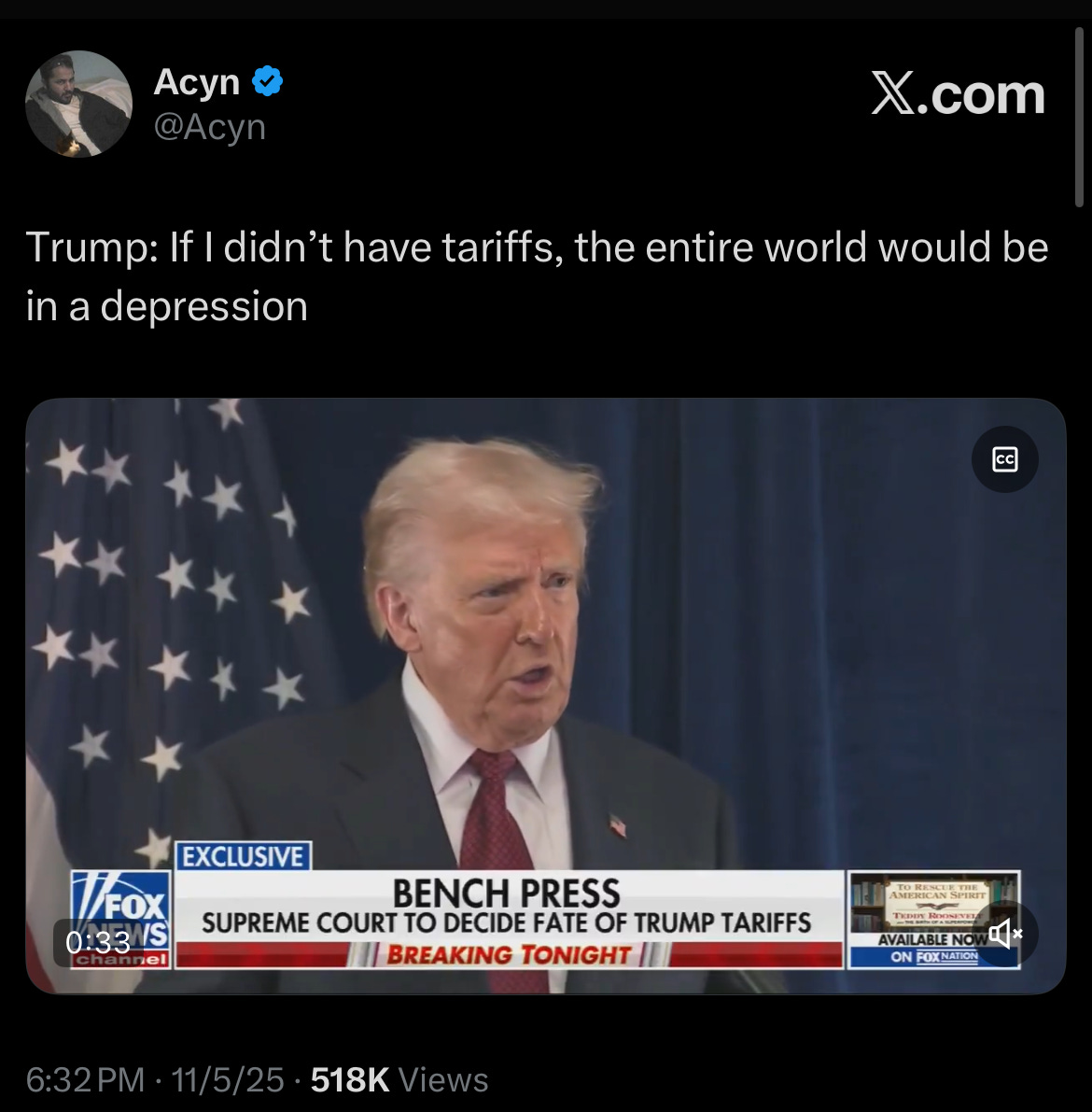
The Trump Admin had no cogent framework for the tariffs to be utilized, other than their excuse of tariffs being tools for reciprocity (revenge). The good news here is that they seem to be one of the main reasons for Trump’s declining approval among the public.
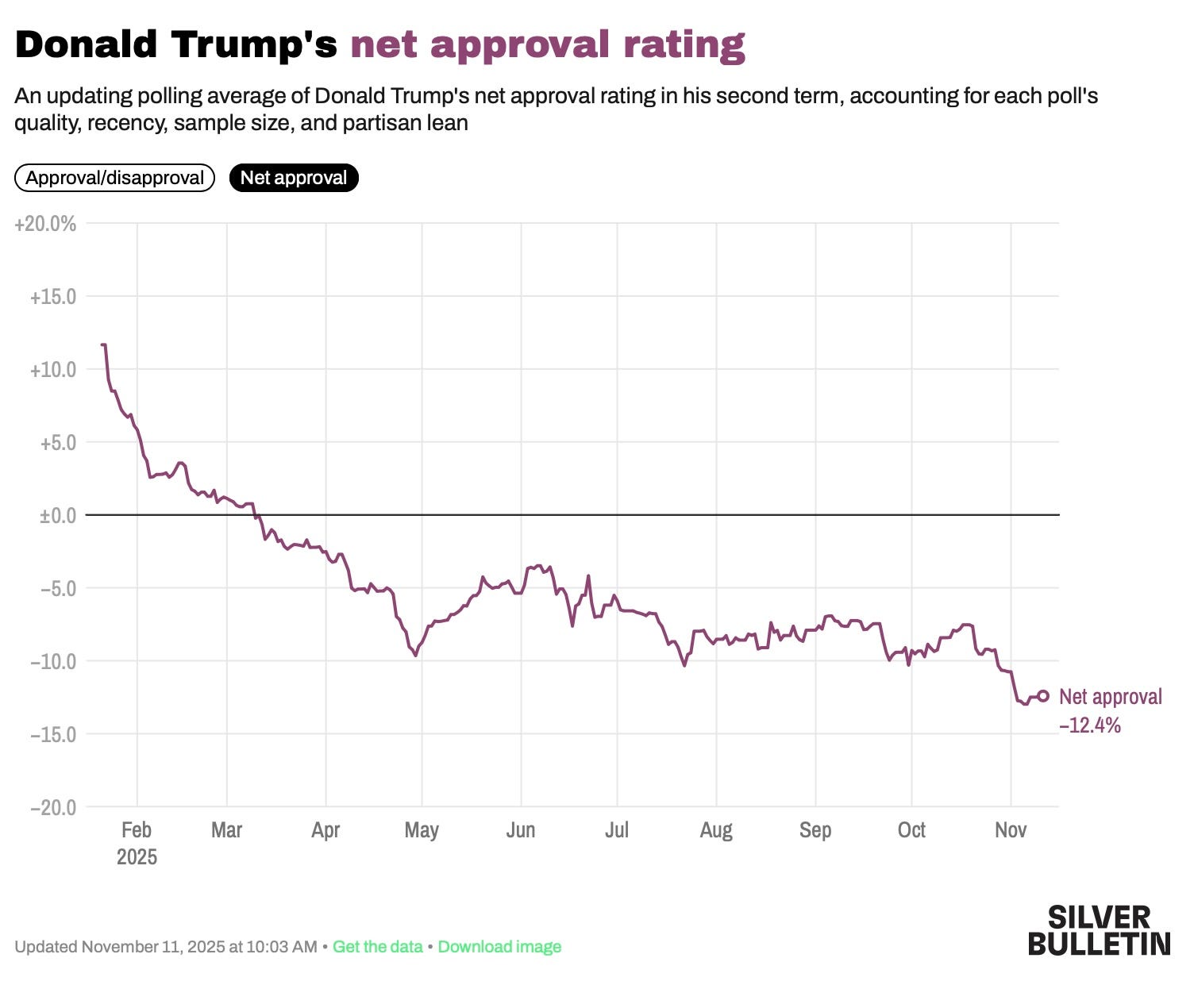
While it’s true Americans apparently care more about whether Trump threatens Jimmy Kimmel’s show or the destruction of the East Wing of the White House, they also definitely care about the lack of focus when it comes to the cost of living, inflation, and other economic issues. The tariffs, tied to trade and inflation, have been leading factors in Trump’s inability to stay relatively popular. We all noticed the quick downturn in the stock market and the panic on Main Street when Trump first announced the tariffs in April, but since then, he’s mostly been threatening tariffs rather than implementing them. To my knowledge, he has yet to make one official, formal deal with another nation on trade, not without cowering out after a few weeks.
What we saw on election night, though not enough of a blue wave to win Democrats Senate races in Iowa or Ohio, certainly gave everyone in the political sphere a nod towards centering campaigns on affordability. Sure, the minority party often receives more support in post-elections. But it’s also quite noticeable how much of the country tied the current Admin and leadership to those unpopular trade and economic policies.
People don’t think tariffs are easing their problems with paying bills; that’s not something to shrug off as someone in the Admin.

If SCOTUS rules against Trump
An article by the AP articulates how Trump would be able to implement tariffs using other means even if SCOTUS rules against him in this emergency powers case. If SCOTUS rules against the Trump Admin, meaning presidents cannot use emergency powers to arbitrarily set tariff rates, they could also still be created through Congress. This would create a sticky situation, especially after recent election losses by Republicans.
As of yet, Republicans aren’t doing anything about Trump’s use of tariff authority or emergency powers—other than a symbolic vote of overturn on Brazil’s tariffs by a few moderate Republicans in the Senate. But I think that’s because they know Trump really does care about them; he sees them as a tool for personal leverage on other nations and domestic company owners. Though it’s true they can be used for such purposes, that doesn’t seem to be the interests of everyday Americans trying to afford groceries while staying competitive with China on more advanced technologies.
Still, while I think the Admin did the right thing strategically in getting SCOTUS to rule on the emergency powers question, Trump’s personal desire to have full control is still front and center of the conversation. And it will be his downfall.
Trump holds all the cards, as he likes to say.
Republicans in Congress have shown little to no sign of pushback on the Admin—any that tangibly matters anyway. This puts them in a really bad situation if SCOTUS rules against Trump, giving Congress more of the authority and thus responsibility.
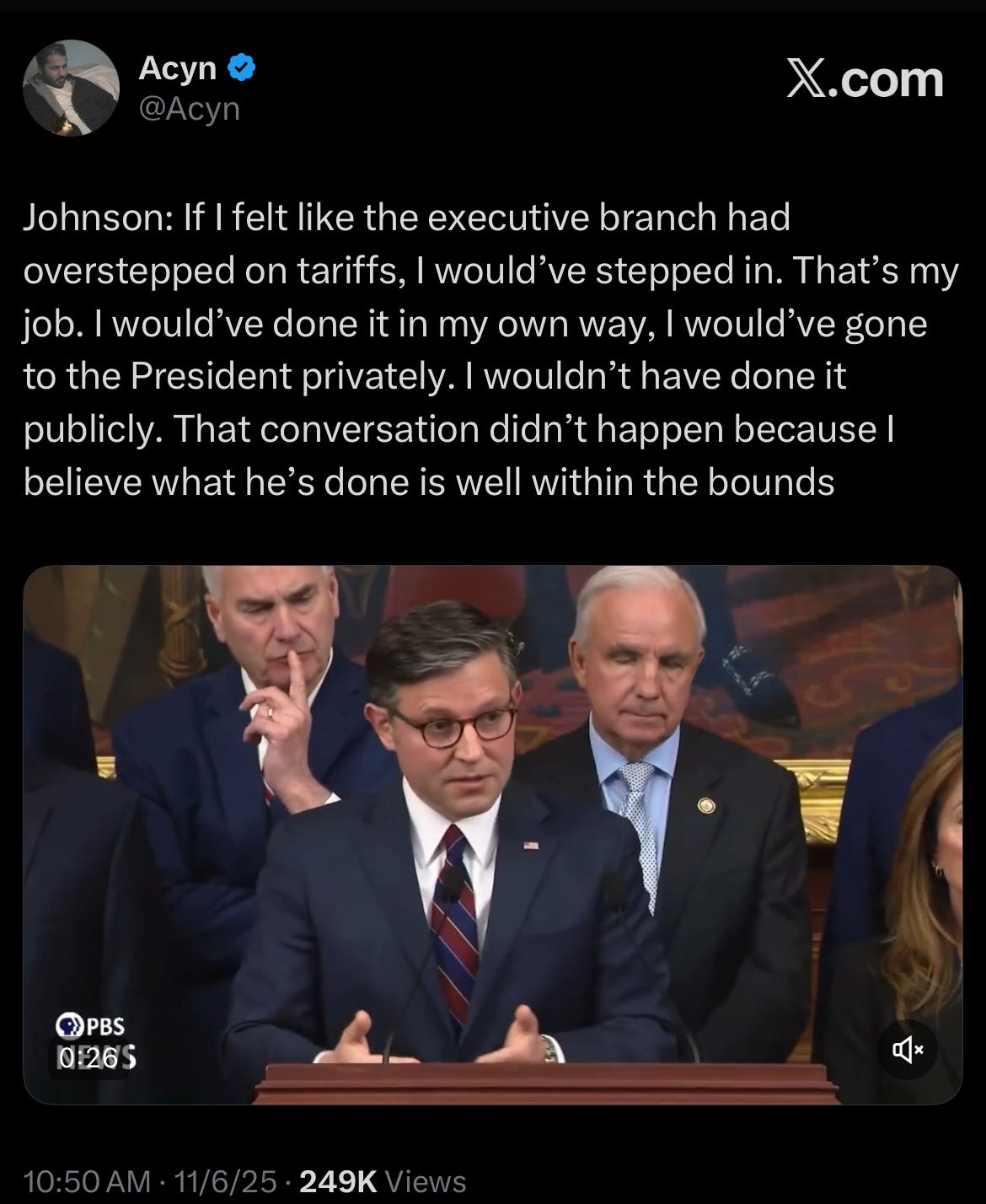
Trump can demand Republicans continue his tariffs, at the same rate, for as long as he desires. But will they actually do it, knowing its unpopularity and the economic effects slowly starting to show themselves? That is the question. If they decide against it, they will certainly face primaries from the right.
Trump will then have the ability to blame Congress for not implementing his preferred tariffs, including the countries, rates, and duration, all at the same time. He will have leverage, based on his own official dealings with other nations as well as with congressional leaders, requiring an even more collaborative relationship (can anyone truly collaborate with Trump?). The president will also be able to take credit for any benefits that come with either tariffs or a reduction of them and an improved economic picture.
The only real loss here is that the Admin will owe these companies billions in refunds. Fortunately for them, Trump has billions. The only real way he could lose here is if he continues to publicly tell people he wants to do the unpopular things to the economy, and Congress/SCOTUS/Democrats keep stopping him from following through.
Trump’s got to be more strategic than that.
If SCOTUS rules in favor of Trump
If SCOTUS rules with the Trump Admin, the obvious result is tariffs stay in place, and more are threatened and implemented soon after. Another win for Trump!
Congress will be able to continue its negligence if SCOTUS rules in Trump’s favor. They’ve got the power to take away tariffs or change them, and they’ve chosen not to do it. I don’t see any reason to expect this will change, especially with the addition of judicial approval.
Trump will be immune from others impeding his authority on tariffs, but not from the consequences. The trouble for us is that he’ll have even more expanded authority to act similarly on a plethora of other “emergencies” he’s declared—from energy to immigration. Trump will be able to claim more praise from his base for sticking it to countries treating us unfairly on trade and continue crony capitalistic processes for deal-making without ever considering Congress.
The only part of this entire equation, in my view, that has the possibility of actually putting a full stop to the newly-introduced tariff policy would be if tariffs remain unpopular, the economy continues to move downward, and people vote for anti-tariff legislators.
Trump really does hold all the cards on this one. But that also means he’s bound to show a bad hand.