
Abolishing gerrymandering would improve American democracy

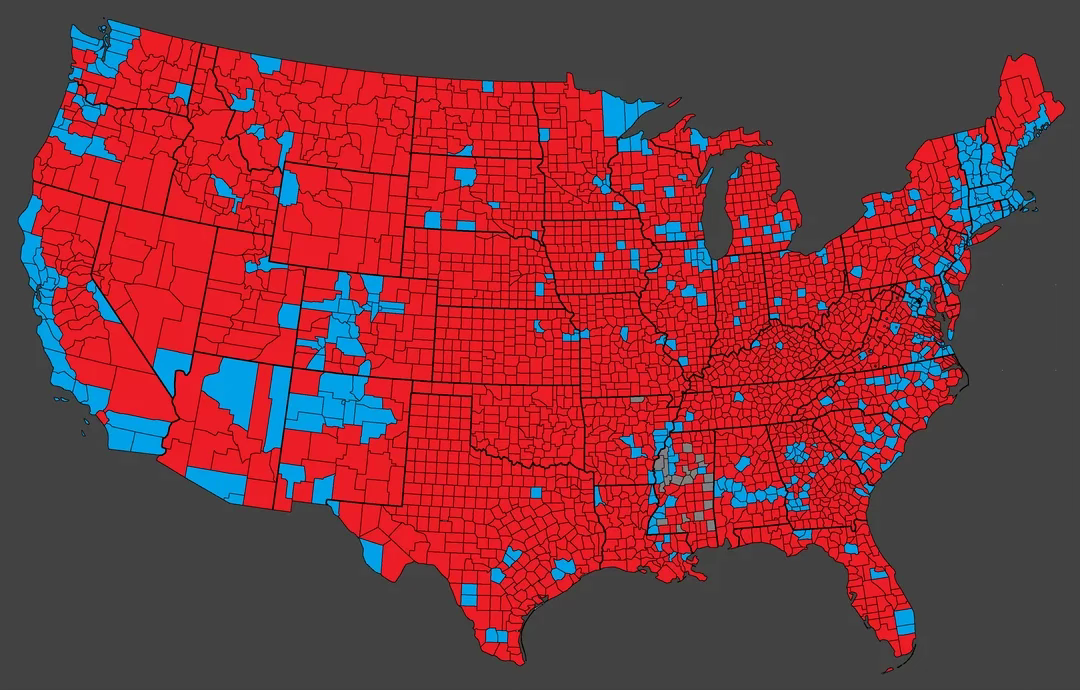
I’ve been toying with this idea lately about what we really mean by “representation” in government.
When people see politicians acting in ways they disapprove of, they often say those leaders aren’t representing their interests. And because we generally understand democracy’s purpose as fundamentally representative, we tend to suggest reforms aimed at making the system more reflective of the voting population.
But representation shouldn’t mean electing someone who is like you—it should mean having the power to remove them.
Elected officials’ main job is to deal with specific problems and test solutions. Voters’ interests are served through the functioning of democratic mechanisms—elections. We cannot predict with certainty how people will govern, but we do know when we dislike the game plan of those currently in power. The strength of democracy lies not in making predictions, but in enabling error correction. The fact that most people vote for the “lesser of two evils” actually points toward the ideal way to think about elections: voters are unlikely to find a perfect candidate, necessarily so, since candidates must appeal to many different constituencies.
In reality, voters are choosing whether to remove the incumbent or the party currently in power.
In this short three-part series on improving American democracy, we’ll stick with the premise that the core purpose of elections is removal—not representation. Therefore, we have to confront one of the biggest obstacles to removing those in power: gerrymandering.
Republicans Have No Incentive to Solve the Problem
Independent redistricting commissions—used in many blue states—are the most common proposed solution to gerrymandering. But this runs into a familiar problem in American politics: if only one side plays by the rules, that side will lose the game.
Anti-gerrymandering reforms in states like California and New York created fairer maps in 2024, but also cost Democrats more seats than the margin that determined control of the House.
For reforms like these to work, both sides need to be on board. But Republicans have little incentive to support reform.
The For the People Act (2021) would have banned partisan gerrymandering nationwide. Republicans didn’t support it because they benefit more from the gerrymandered system. According to the Brennan Center, gerrymandering gave Republicans an advantage of about 16 House seats in the 2024 race, while their actual margin of control was just six seats. Among Republican-controlled states, only Idaho and Montana have independent redistricting commissions—and those two states together elect just four House members.
What’s more surprising is that even in some Blue states with independent commissions, the congressional maps still skewed in favor of Republicans—in places like New York, Michigan, and Colorado. So even where commissions are in place, Republicans still seem to benefit (likely due to the geographic concentration of Democratic voters in urban areas versus the more dispersed spread of Republican voters).
Independent commissions may be an improvement over the status quo, but not if only one party adopts them.
Democracy Suffers Under Proportional Representation
I’m generally skeptical of proportional representation as a democratic solution. And I’m even more skeptical of how it’s applied in response to gerrymandering.
Take the Fair Representation Act (2017). It aims to eliminate gerrymandering by combining ranked choice voting (RCV) and multi-member districts (a system where an electoral district sends more than one officeholder to a body).
The multi-member approach is tricky because either the party chooses the candidates or the voters choose from a list of candidates the party provides. In either case, I doubt voters would support a system where they have less direct influence, especially when trying to solve the problem of manipulated boundaries on the part of the current majority.
Still, I do think the multi-member idea has value: it’s more important that we can remove bad leaders in a meaningful way than it is for every voter to get their preferred candidate. Nevertheless, most voters are still weary of a “smoke-filled room” primary process.
Combining the multi-member strategy with RCV doesn’t truly solve anything because this system changes how votes are counted—not where votes go. Its entire goal is proportionality. Like with the intuitive but flawed idea of maximizing “representation,” this approach misunderstands the core goal of democracy. Coalition-building can actually impede majorities from governing, since the minorities’ support is more necessary to govern. RCV within gerrymandered districts actually increases the difficulty for the district’s majority—whoever it is—to replace its leaders.
What we need isn’t more proportionality, but more constraints—limits—on the ability of those in power to manipulate their own districts to prevent ideological competition.
We should want politicians to do things for our votes; that happens less often when they have no reason to worry about losing.
Gerrymandering Needs More Constraints
Democracy is not about getting what we want; it’s about making sure we’re not stuck with what we don’t.
Some argue that gerrymandering isn’t a problem because voters can still elect leaders who oppose it. I think the problem is more nuanced.
If only one party opposes gerrymandering, that party is structurally handicapped from correcting the error.
The voters who benefit from gerrymandering have little reason to want reform.
We need to be realistic about what “equal access to the democratic process” actually means.
We need structural guardrails to protect the removal mechanism that defines a healthy democracy.
One idea is to implement a vote-share constraint: any new district map must stay within a narrow partisan margin of the previous election—say, ±3%. If a politician won their district by 5%, they can’t redraw the lines to give themselves a 20-point edge. They could redraw their map within 3-8% competitiveness. It doesn’t matter how the map changes geographically; the partisan makeup must stay roughly the same as how that boundary voted in the previous election.
Politicians would still have flexibility in drawing boundaries, but they must ensure it’s with communities whose interests align more closely with their own if they want to win there. Politicians competing to win over communities with bold ideas, knowing they could be removed if they fail: it’s how democracy should work. What they can’t do under this rule is eliminate competition entirely.
There’s no need for full proportional representation. This rule simply prevents those in power from distorting future elections in their favor by making it structurally harder for voters to remove them. Politicians still represent geographic areas and respond to local concerns—but under institutions that preserve electoral accountability.
We should also account for major demographic shifts—population growth, migration, and census updates. States like Florida and Texas might need new districts or to redraw existing ones. Rapid-growth metro areas like Charlotte and Phoenix should also be allowed to adjust mid-decade. In cases where new districts are created, or where no clear incumbent or predecessor district exists, the partisan balance should default to the average vote share from the most recent election in the area of the newly-formed boundaries.
The point of this proposal is protecting democracy as a system of peaceful correction of political rule: a system where incumbents can’t redraw their way into permanence. A system where losing power is always a real possibility. If a politician keeps the same vote-share cap but wins a larger share of the vote, it means they persuaded people they hadn’t won over before. The only use of proportionality here is to determine district boundaries by limiting manipulation that undermines removability.
More ways to improve American democracy
Once we prevent those in power from securing an unfair structural advantage in elections, we can turn our attention to bigger challenges.
With politicians now more focused on solving problems for their constituents, we should think about how to improve their ability to test the ideas they were elected to implement—ideas by which voters will judge them in the next election.
In my view, the biggest obstacle to swift, targeted legislation by the majority in Congress—at least at the national level—is the filibuster. Although I’ve written an article arguing for the abolition of the Senate’s 60-vote supermajority rule, I think there’s more to say in support of its hopeful demise.
Part one of three ways to improve American democracy: abolish gerrymandering.
Part two of three ways to improve American democracy: abolish the filibuster.
Make sure to subscribe so you don’t miss part two!
Have you heard Rob Sand’s proposed reforms?
One is to get rid of party primaries. Have everyone in one primary and then the top 3, 4, or 5 candidates go to the general election. (Must be more than 2 so that it’s not a binary choice)
The second reform is that voters can vote for every candidate they find acceptable. Thus the winner must be broadly acceptable to the public.
What do you think?
I encourage you to give some thought to the selection of electors for the electoral college. The presidency is very powerful right now, so there is serious leverage in improving the way presidents are elected. The electoral college system has well-understood disadvantages, but a number of advantages which are less discussed. One underrated advantage is that it allows state-by-state experimentation. If a single state changes the way electors are chosen in that particular state, other states can observe the results and decide if they want to adopt the same method for themselves. That lets us do a "trial run" before rolling out a change to the entire nation.
The more general problem with this sort of reform effort is that people will always evaluate the reform proposal based on whether it hurts or helps their preferred political party. It might be possible to design a reform so it simply improves the process without severely hurting or helping either party. Perhaps this could be achieved through the use of interstate compacts somehow, e.g. imagine if a red state and a blue state with an approximately equal number of electoral votes / Congressional seats agreed to implement the same reform simultaneously. If California and Texas are currently defecting in the interstate prisoner's dilemma, what would cooperation look like?
Anyways, I have my own zany idea for completely rethinking how state electors are chosen, but I'm curious if you come up with anything.