
Israel is not safe from Trump's abandonment
What makes Israel different in the mind of Trump: nothing.

.jpg)
Syria
In 2019, as Turkish and Syrian forces were preparing to launch an offensive against the Kurdish-led coalition, the Trump Admin ordered American troops to withdraw from northeastern Syria, where the United States had been supporting the Kurdish allies. Though facing pushback from Republican and Democrat lawmakers in DC, the Trump Admin reportedly cut off aid to the Kurds as the offensive commenced. The result was the displacement of over 300,000 people, nearly 100 dead civilians, a dependency on volunteerism by Kurdish forces, and a severe diminishment of Kurdish autonomy. Worst of all, Russia arranged to patrol the region along the line of contact between Turkish and Syrian forces, filling the security vacuum from the US withdrawal.
Mazloum Abdi, the Syrian Kurdish commander-in-chief, announced that they were ready to partner with Russia and Syria:
"We know that we would have to make painful compromises with Moscow and Bashar al-Assad if we go down the road of working with them. But if we have to choose between compromises and the genocide of our people, we will surely choose life for our people.”
Afghanistan
A few months later, the Trump Admin negotiated a withdrawal agreement with the Taliban that excluded the Afghan government. The deal included freeing 5,000 imprisoned Taliban soldiers, drawing down U.S. troop levels, and fostering Afghan peace talks with the Taliban— if conditions were met. The most important of these conditions was a ceasing of Taliban attacks on US and Afghan forces. The Trump Admin kept to the pact, reducing U.S. troop levels from about 13,000 to 2,500, even though UN and U.S. officials reported that the Taliban continued to attack Afghan government forces and cooperated with al-Qaeda terrorists. Not only did the Afghan government have consistent problems with recruitment, retention, training, and corruption, but their Army force was about half the size of the Taliban’s.
Afghanistan’s First Vice President, Amrullah Saleh, shared the sentiment of the Syrian Kurdish commander-in-chief after President Trump’s desertion:
“I am telling [the United States] as a friend and as an ally that trusting the Taliban without putting in a verification mechanism is going to be a fatal mistake.”
Palestine
In the background of the Trump Admin’s isolationist efforts in Syria and Afghanistan, it was also negotiating with several Middle Eastern nations regarding trade deals with Israel, known as the Abraham Accords. The negotiations occurred outside of standard diplomatic channels, breaking with long-standing foreign policy of treating peace with the Palestinians as a condition for Israel’s integration with the Arab world.
As former senior fellow and director of the Middle East Institute Khaled Elgindy wrote in Foreign Affairs:
“This approach to Arab-Israeli peacemaking, however, is contingent on sidestepping the Palestinian question. Up until 2020, the consensus among Arab states had been that normalization with Israel would come only after the creation of an independent Palestinian state. The decision by Bahrain, Morocco, and the United Arab Emirates to break ranks therefore effectively robbed Palestinians of an important source of leverage against Israel.”
According to Abbas Zaki, a member of the political faction that controls the Palestinian Authority, the Abraham Accords represented “one of the reasons” for the Oct. 7 attack, which “obstructed and complicated all strategies and agreements… that deny the freedom and dignity of the Palestinian people.” The attack “put the Palestinian issue back on the international agenda.”
Israel
The common theme throughout the first Trump Admin wasn’t that he made for a good ally or that he was a keen negotiator who achieved just compromises; it was a willingness to surrender those who got in the way of Trump’s personal ambitions. In the case of the Abraham Accords, it was something more mundane: winning the Nobel Peace Prize. But if we have learned anything from his forsakenness it's that whether friend or foe, aggressor or victim—you will be abandoned if you’re in Trump’s way.
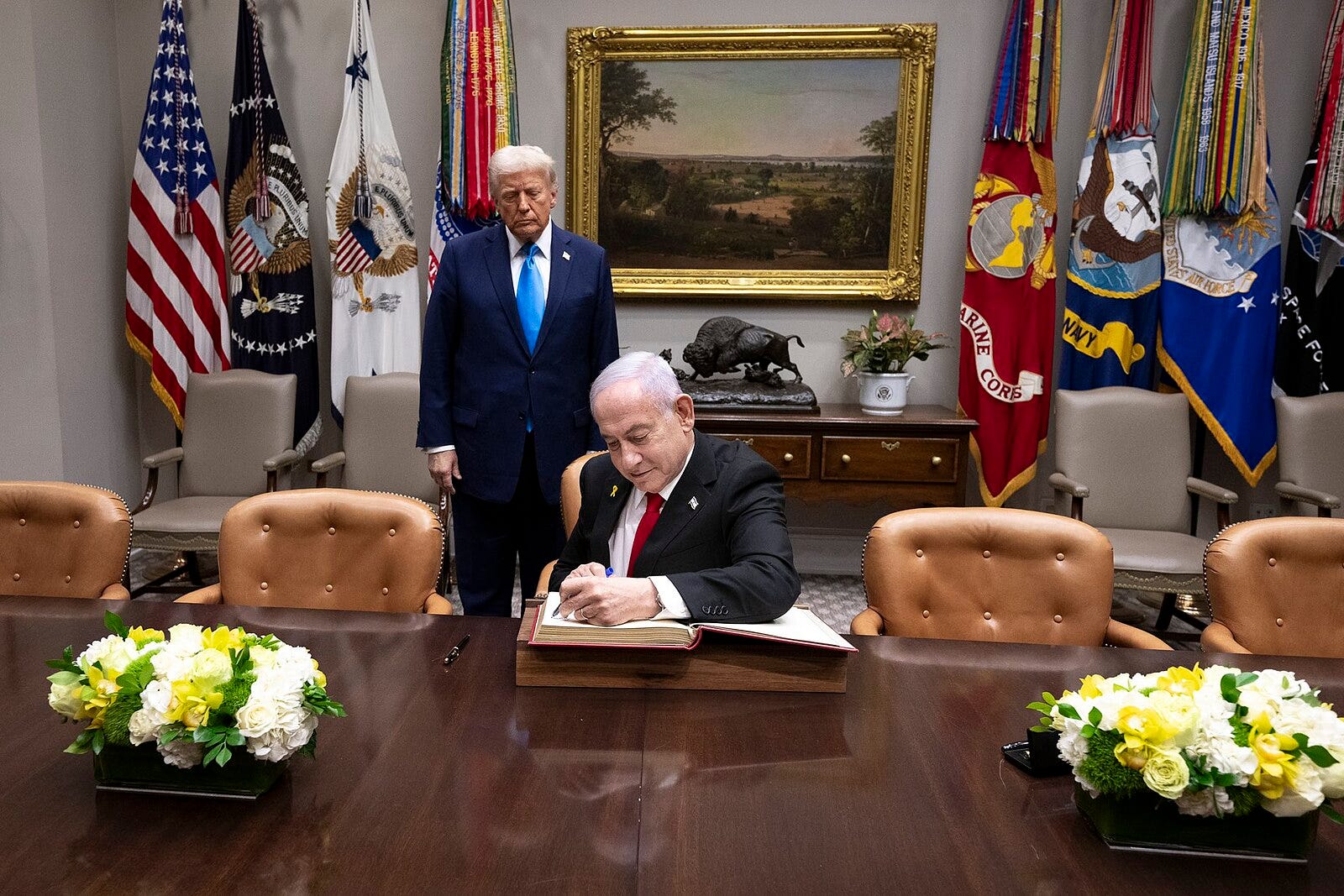
Trump has already made clear to Israeli Prime Minister Benjamin Netanyahu that he is willing to discard him for personal ambitions and public praise. In 2021, Trump said he viewed Netanyahu as a bigger obstacle to peace than Mahmoud Abbas, the president of the Palestinian National Authority. Trump also acknowledged that he undercut Israeli-Palestinian negotiations in a joint appearance with Netanyahu at the United Nations. He resented that Netanyahu didn’t show more gratitude or reciprocate when Washington made concessions. “Bibi, I think you are the problem,” he told the prime minister, according to Kushner’s memoir. And just days after the October 7th attack, Trump said Bibi was caught unprepared by Hamas’ attack and praised the Lebanese militant group Hezbollah as “very smart.”
I wrote a few weeks ago about how, based on Trump and Elon Musk’s ostensible standard for what counts as waste, fraud, and abuse, the non-economic benefits of sending funding to Israel, like national defense and religious fanaticism, are becoming less applicable—especially if Trump and Bibi continue with their plan for Gaza.
If Trump wants Israel to stop fighting in the future, what will keep him from abandoning Bibi—someone who is already on thin ice—militarily, financially, or morally? The reason for Trump’s neglectful tendencies is presumably due to the same isolationist, “peace and harmony” mentality he had when he abandoned the Kurds and Afghans: people are dying in warfare, people don’t like war, therefore he must stop the warfare at any costs. If the price is giving up allies or innocent civilians fighting for democracy, so be it.
Ukraine
After promising to end the Russia-Ukraine war within 24 hours, Trump has incredulously rejected Russia’s aggression, called Ukrainian President Volodymyr Zelenskyy a dictator, and pressured Ukraine to give up half their critical rare minerals. He also started negotiations to end the war without Ukrainian involvement: sound familiar?
Do not depend on Trump
Ukraine is just the latest Western ally to be abandoned by the Trump Admin; they won’t be the last. Trump stated multiple times during the campaign that if he returned to the White House, he would not defend NATO members who don’t meet defense spending targets. He also suggested he would tell Russia to attack NATO allies he considered delinquent on those spending targets.
One of the new Trump Administration’s first moves was to start a threatening tariff war with our closest trading partners, Canada and Mexico. It has yet to be seen what he will do regarding US policy in the Indo-Pacific region as China threatens to take Taiwan and North Korea keeps pestering South Korea.
Much of the American Right’s support for Israel is tied to an Evangelical Christian desire for the apocalypse to occur in the Holy Land, leaving a lot of room for error. If Trump follows through on his plan of forcibly removing millions of Palestinians to Egypt or Jordan, he will lose the minimal gains in support he made with Arab-Americans and moderates. It will only be a matter of time before Hamas, Egypt, or some other nation or militia group attempts another October 7th; what will Trump do then? Will he change course for the very first time and support the Jewish nation indefinitely, or will Israel experience the same abandonment and humiliation every other partner has felt since Trump's victory in 2016? My hope is that he halts his isolationist schemes, but realistically, Israel will follow the same fate— it’s just a matter of when.